Surgeries for Pelvic and Acetabular Fractures
Fractures of the pelvis and acetabulum are serious injuries, often resulting from high-energy trauma such as car accidents or falls from height. These fractures require precise evaluation and specialized treatment due to the proximity of major blood vessels, nerves, and internal organs.
1️⃣ Pelvic Fractures
The pelvis is a ring-like structure composed of several bones. Any fracture can affect the stability of the body and may be life-threatening in severe cases.
🔹 Types of Pelvic Fractures
Stable fractures: Simple cracks without displacement
Unstable fractures: Bone fragments are displaced or the pelvic ring is disrupted
Fractures with internal bleeding
🔹 Symptoms
Severe pain in the lower back or pelvis
Difficulty or inability to stand or walk
Swelling and bruising
In severe cases: low blood pressure due to bleeding
🔹 Treatment
Non-surgical treatment: Bed rest and monitoring for stable fractures
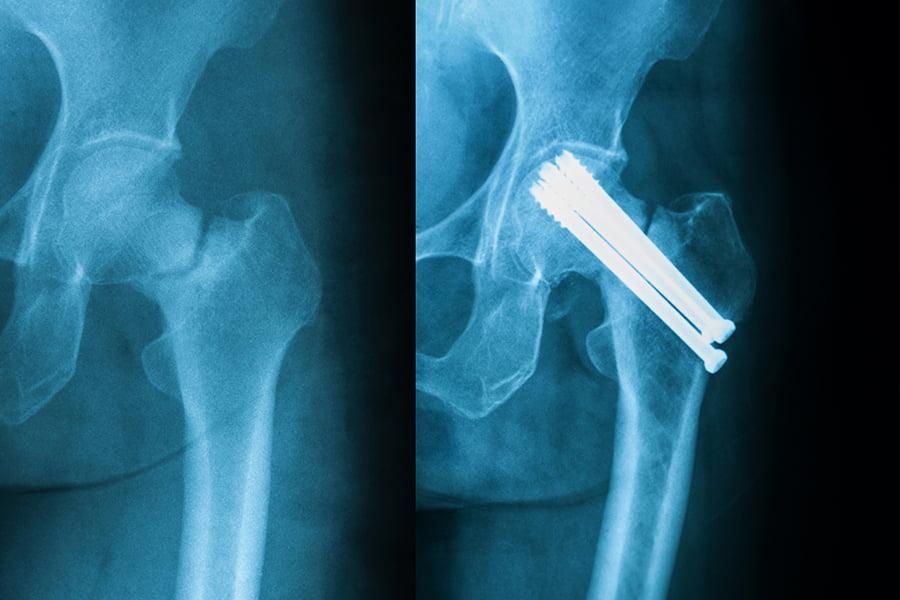
Surgical treatment: Internal fixation using plates and screws for unstable fractures
Sometimes temporary external fixation is used in emergency situations
2️⃣ Acetabular Fractures
The acetabulum is the socket of the hip joint that holds the head of the femur. Fractures here affect the joint surface directly.
🔹 Causes
Car accidents (impact of the knee on the dashboard)
High-energy falls
Sports injuries
🔹 Symptoms
Severe pain in the hip
Inability to move the leg
Leg may appear shortened or rotated in some cases
🔹 Treatment
Non-displaced fractures: Conservative treatment with rest and follow-up X-rays
Displaced or joint-involving fractures: Surgical reconstruction of the joint surface with plates and screws
In severe cases or in elderly patients with significant joint damage, hip replacement may be considered.
Goals of Surgery
Restore pelvic stability
Reconstruct the joint surface accurately
Reduce the risk of early arthritis
Allow the patient to regain normal mobility
Recovery
Hospital stay for several days depending on severity
Limited weight-bearing on the affected leg for 6–12 weeks
Intensive physiotherapy
Full recovery may take 3–6 months or longer