Treatment of All Fractures of the Upper and Lower Limbs
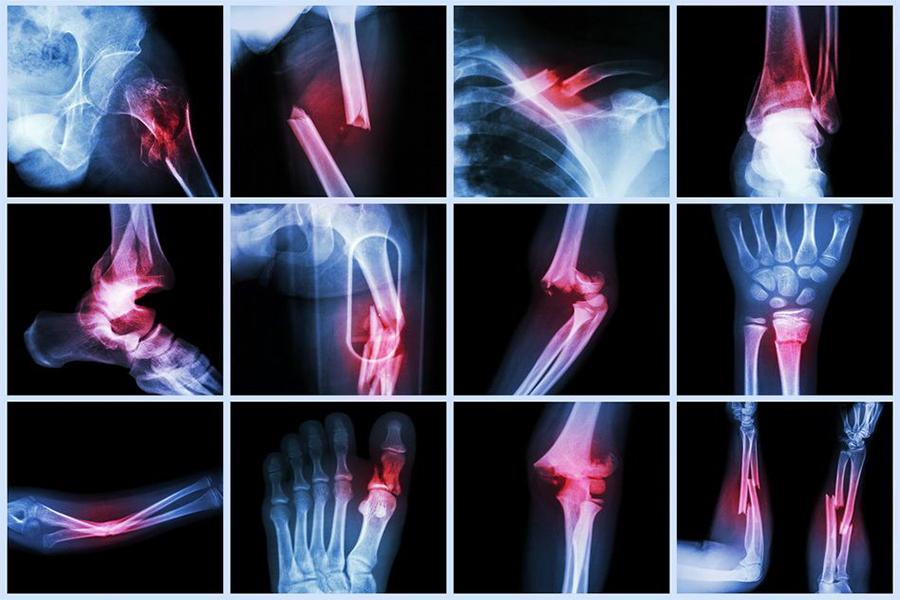
Fractures of the upper (shoulder, arm, forearm, wrist, hand) and lower limbs (pelvis, hip, thigh, knee, leg, ankle, foot) range from simple cracks in the bone to complex, displaced, or open injuries. Treatment depends on the type of fracture, location, displacement, patient age, and activity level.
1️⃣ Initial Management (Emergency Care)
Regardless of the fracture site, early management includes:
Immobilization of the injured limb
Pain control
Ice and elevation (when appropriate)
Assessment of blood supply and nerve function
X-rays (and sometimes CT scan)
Open fractures require urgent surgical cleaning and antibiotics.
2️⃣ Non-Surgical Treatment (Conservative Management)
Used in stable, non-displaced, or simple fractures.
🔹 Methods:
Splints or casts
Functional braces
Sling (for shoulder and clavicle injuries)
Traction (in selected cases)
🔹 Suitable for:
Simple forearm fractures
Some wrist and ankle fractures
Certain fractures in children
Stable fractures without displacement
Healing time typically ranges from 4–12 weeks, depending on the bone involved.
3️⃣ Surgical Treatment
Recommended for displaced, unstable, multiple, open, or joint-involving fractures.
🔹 Common Surgical Techniques:
Internal Fixation
Plates and screws
Intramedullary nails (commonly used in femur and tibia fractures)
Screws alone for specific fracture types
External Fixation
Metal frame outside the body connected to pins in the bone
Used in severe trauma or open fractures
Joint Replacement
In severe joint fractures (e.g., hip fractures in elderly patients)
4️⃣ Examples by Region
Upper Limb Fractures
Clavicle fractures (often treated conservatively)
Humerus fractures (casting or surgery depending on displacement)
Forearm fractures (often require fixation if both bones are broken)
Wrist fractures (casting or surgical fixation)
Lower Limb Fractures
Hip fractures (often require surgical fixation or replacement)
Femur fractures (usually treated with intramedullary nails)
Tibia fractures (casting or surgical fixation)
Ankle fractures (casting or plate and screws if unstable)
5️⃣ Rehabilitation
Rehabilitation is essential after fracture healing:
Physiotherapy
Gradual weight-bearing (for lower limb fractures)
Muscle strengthening
Range-of-motion exercises
Full recovery may take 3–6 months, and sometimes longer for complex fractures.
Goals of Treatment
Restore bone alignment
Achieve solid bone healing
Restore function and mobility
Prevent complications such as stiffness or deformity